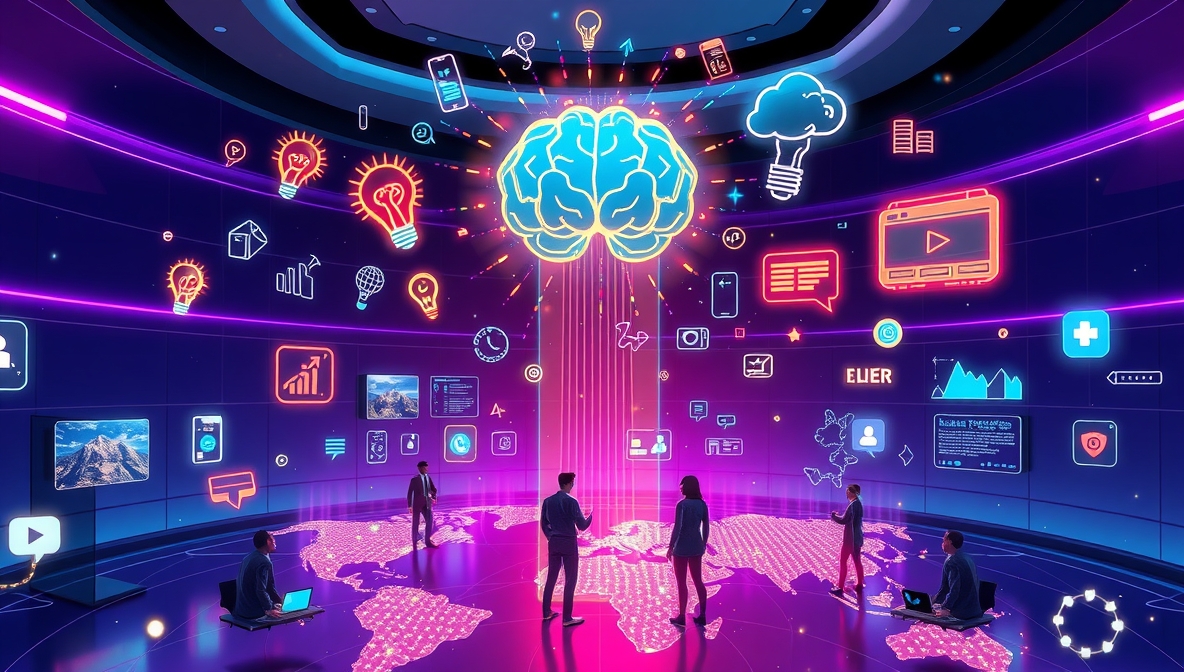
Artificial intelligence, once a curiosity that lived in the nerdiest corners of academia and computing’s earliest prototypes, has recently gone mainstream. From AI-crafted music tracks and computer-generated influencers, to scriptwriting aides and viralling art — machine-made content is altering the means by which audiences make, experience and engage with entertainment. This shift is crucial for creators and brands alike to maintain their cultural relevance and ethical compass in society while also leveraging tools that have the power to actually escalate your popularity status in an ever competitive digital world.
How AI Entered the Cultural Mainstream
From Experimental Tech to Creative Partner
At first, AI’s place in media was subtle — recommendation engines, analytics and automation tools. Progress in natural language processing, generative adversarial networks, and multimodal AI turned these systems into creative cohorts. Nowadays, AI can write lyrics, produce album art, develop fashion concepts and mimic visual styles popularized by the greats.
This evolution didn’t happen overnight. It is the culmination of years of experimentation conducted by technologists and early adopters who embraced the potential for AI not to replace creativity, but rather to enhance it.
AI’s Impact Across Key Pop Culture Domains
Music, Film, and Visual Arts
And in music, AI-generated compositions are being employed for background scores, experimental albums and customized soundtracks. Movie studios are increasingly turning to A.I. for script analysis, de-aging effects and virtual characters. And visual artists are experimenting with generative tools to try out aesthetics that would be hard (or impossible) to create by hand.
These applications showcase expertise-driven adoption, where practitioners who know as much creative theory as technical limitations are best armed to use AI responsibly and effectively.
Social Media and Digital Fame
You’ll find AI influencers, virtual performers, and automated content pipelines on every social media platform. These organizations can keep up with post production schedules, scale with trending formats and reach international audiences in a variety of languages. Yet success continues to come down to human eyes — storytelling and cultural sensitivity, authenticity continue to be nonnegotiable.
Trust, Authenticity, and Ethical Responsibility
Why Transparency Matters
As AI-created content gets better and better, though, audiences care more about disclosure. Transparent labeling and ethical terms of use are important for building trust, a key factor in EEAT. “When you’re a brand or maker and have the integrity to say ‘I use AI as my paintbrush,’ instead of hiding behind it, it makes it more defensible.”
Avoiding Homogenized Content
By depending too much on A.I., there’s a potential danger of creative sameness. Algorithms taught on available data accidentally perpetuate clichés or biases. The pros fight fires by taking AI as a starting point and iterating the output through their own knowledge, cultural context, and experience of life.
Practical Guidance for Creators and Brands
Using AI Without Losing Your Voice
In accordance to the EEAT criteria, creators should:
- Treat AI as an assistant, not author of record
- Check validity of outputs with regard to accuracy, compulsion and tone.
- Use machine efficiency with human judgement.
Power in this space derives from discernment: Knowing when AI adds value and when it dilutes the real.
Long-Term Cultural Relevance
Trends in AI may change quickly, but audiences don’t forget authentic connection. Sustainable AI success is when all of these moving parts are coordinated and united by a coherent creative vision, ethical guidelines and a measurable audience value—– not just overnight virality.
The Future of AI in Pop Culture
AI-generated content will continue to proliferate and shape the ways in which stories are told and fame is built. Yet its long-term adoption depends on trust, transparency and responsible use. Once the regulations and audience get more developed, the ones that will survive are the folks that have a technical understand of how its all coming about mixed with some creative integrity.
Conclusion
The ascendancy of pop culture AI-created work is a significant moment in creative history. When AI is used thoughtfully, it gives artists and entertainers as well as brands the ability to experiment at scale without losing authenticity. By privileging expertise, experience, authority and trustworthiness, creators can unlock AI not just as a hack but as a mighty amplifier of human creativity — one that rewires pop culture without dispossessing it of its soul.